
Many independent artists finish an album, upload it, and hope the algorithm does the rest. That approach leaves discovery to chance. A staged rollout, by contrast, creates several moments for listeners, media, playlist curators, and collaborators to find the project — before, during, and after release day.
This guide walks through the full timeline: the assets you need, how to choose a rollout format, what actually moves the needle after launch, and where artists most often go wrong. It's built for independent artists and small teams working with limited time and budget, not major-label machines.
Key Takeaways
- Define your objective, audience, and story before picking a release date
- Finalize audio, metadata, artwork, and press materials before the campaign starts
- Use singles, teasers, and events to create multiple touchpoints, not just one launch day
- Track saves, playlist adds, and repeat listening — not just first-day streams
- Match your rollout size to your actual team capacity and budget
How to Plan an Album Release Strategy
Step 1: Define the Album's Goal, Audience, and Central Story
Start by naming the actual objective. Are you introducing yourself to new listeners, rebuilding after a quiet stretch, or setting up a tour? Each goal changes what "success" looks like. Get specific about the audience too:
- What genre communities do they belong to?
- Which platforms do they actually use?
- Where are they geographically concentrated?
- What existing behavior (saves, shares, show attendance) do they show? Then build the narrative. TSE Rizzle's CHARISMA DON is a useful example: the project leans into a distinct Midwest identity and gives fans a clear reason to connect beyond the tracklist. That kind of framing (a theme, a shift, a perspective) gives every piece of promotional content something to hang on. Finally, set a baseline. Pull your current streaming numbers, email list size, and social engagement rate before the campaign begins. Without a baseline, you can't measure whether the rollout actually worked.
Step 2: Choose the Rollout Format and Release Date
You have three basic formats:
- Full-album drop — everything arrives at once
- Lead-single rollout — one or more singles precede the album
- Waterfall release — you release a single, then a second single that includes the first, building a growing project over several weeks TuneCore recommends pitching media outlets three to six months before an album and scheduling the release itself three to four months out, giving enough runway to secure coverage. Work backward from your release date. Long-lead items (mastering, artwork, video shoots, press outreach) need months. Short-lead items, like social posts, can wait until the final weeks. Assign a single owner to each task (distribution, design, PR, live events) so deadlines don't rest on one overloaded person.
Step 3: Prepare the Music, Metadata, and Promotional Assets
Before anything goes out, confirm the basics are locked:
- Final mixes and masters for every track
- Accurate titles, featured-artist credits, and songwriter/producer information
- Clean and explicit versions where needed
- Correct ownership and metadata across all platforms Submit to your distributor with enough time to fix problems. TuneCore suggests uploading three to four weeks ahead, with review typically taking about two business days; AWAL recommends at least two weeks and warns that metadata corrections can add delays. Then build your campaign package:
- Album cover and single artwork
- Press photos, bio, and tracklist
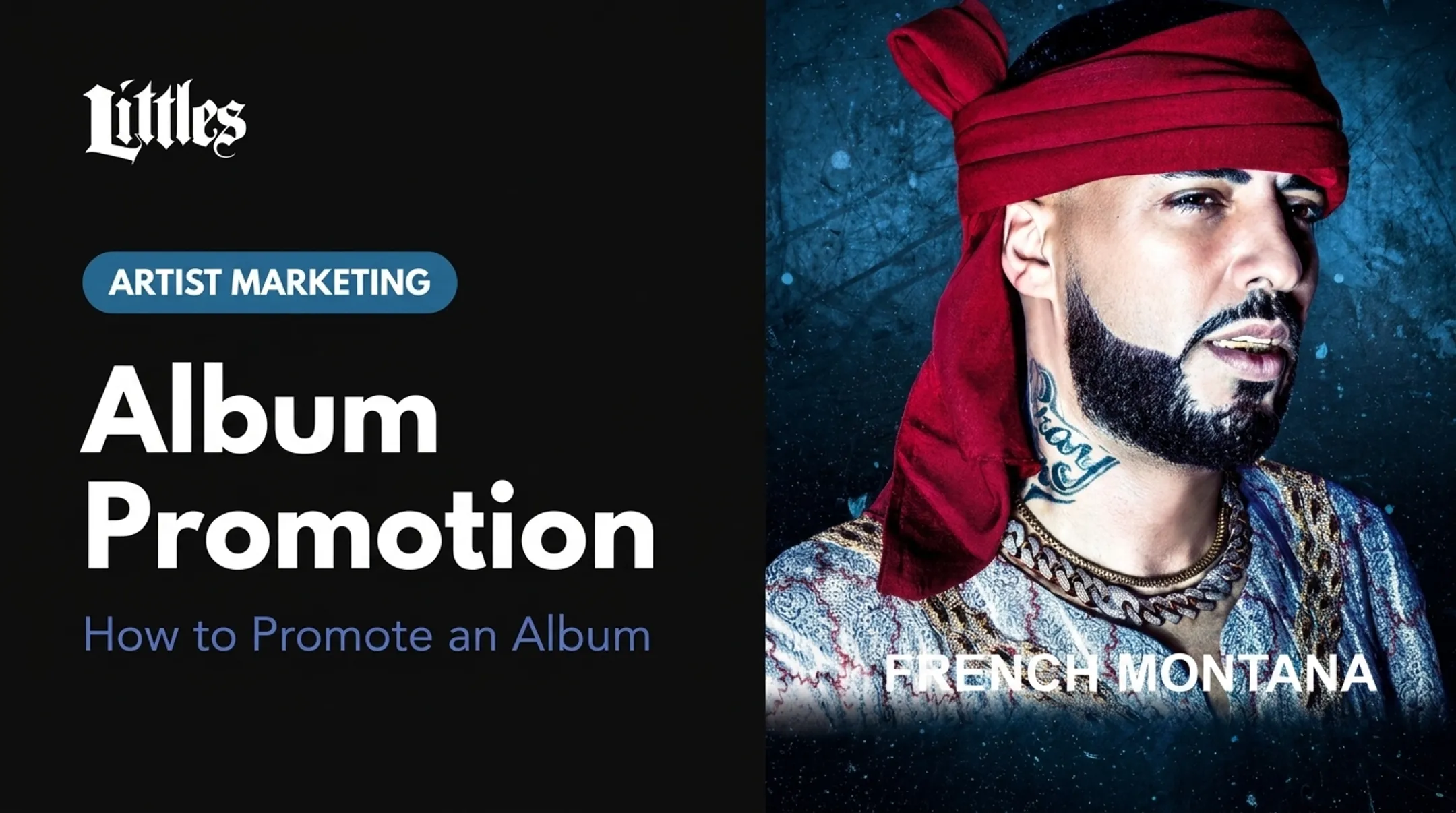
- Quote sheet, EPK, and a private listening link for press This is where visual consistency matters most. Best of the Block's portfolio, built over 27 years in the music industry, includes album artwork for projects like Raekwon's Only Built 4 Cuban Linx… Pt. II, Mobb Deep's Infamy, and French Montana's Excuse My French. Each was built around a cohesive visual system that carries across covers, social templates, and video thumbnails. A recognizable look helps fans and curators identify your campaign at a glance, even before they click play.
Step 4: Build Anticipation Before Release Day
Your lead single should represent the album's sound and give new listeners an easy entry point. Around it, build a progressive story rather than repeating the same announcement:
- Teasers and studio footage
- Lyric excerpts and tracklist reveals
- Interviews and countdown posts
- Short-form video clips Pitch early. Spotify requires songs to be submitted at least seven days before release to be eligible for Release Radar and editorial consideration — placement isn't guaranteed, but missing the window removes the option entirely. Give existing fans a clear action, too: pre-saves, pre-orders, email signups, and a website or smart link you control. Don't rely solely on social algorithms to reach people who already follow you.
Step 5: Execute Release Day and the First Campaign Week
Prepare everything in advance: posts, emails, website updates, and captions should be ready to go live the moment the album drops, not written that morning. Consider a specific event tied to the launch: a listening session, livestream, or release show. IFPI's 2023 research found that 82% of 16- to 24-year-olds engage with music through short-form video daily, so a well-clipped livestream moment can travel far beyond the room it happened in. On release day itself:
- Respond to comments and repost fan content
- Thank collaborators publicly
- Monitor for broken links or missing platform listings
- Identify which song or moment is getting the strongest reaction, and lean into it
Step 6: Sustain Momentum After the Album Drops
The campaign doesn't end at launch. Schedule follow-up content for the weeks after: music videos, acoustic versions, visualizers, producer interviews, and fan reaction reposts. TuneCore's guidance suggests cycling new campaign content roughly every six weeks to avoid a dead zone after the initial release excitement fades. Review your data (streaming sources, playlist adds, email clicks, press pickups) to see where listeners actually came from. Then follow up with the media contacts, curators, and venues who responded, using fresh results to pitch the next single or show.

When Should You Release an Album and What Do You Need First?
An album makes sense when you have a cohesive body of work, a clear story, finished promotional assets, and enough team capacity to support several weeks of follow-up. If your audience is still developing or your budget is tight, start with a single or EP. That path lets you test what resonates before you commit to a full campaign.
Release Infrastructure You Need in Place
- Distributor with an artist dashboard for delivery and tracking
- Website or smart link to capture release-day traffic
- Email or fan channel you can message directly
- Content scheduling tools plus analytics access
- Organized cloud storage for final masters and assets
Assets to Lock Before You Announce
Have these ready before you set a date:
- Final audio masters
- Approved artwork
- Complete metadata
- Artist photos, bio, and credits
- Lyrics where they apply
- Campaign copy and a content calendar you can maintain
Rights, Clearances, and Platform Rules
Clear ownership for every sample, feature, artwork file, and photo before you submit. Distributor and DSP rules change often, so confirm current requirements instead of reusing last year’s checklist.
Key Parameters That Affect Album Release Results
Strong music doesn't guarantee a strong campaign. Timing, audience fit, and consistency all shape whether listeners notice and stay.
Five parameters drive most of the gap between a release that lands and one that fades:
Release runway and sequencing. A staged runway gives your team time to build awareness and fix problems before launch. A surprise full-project drop creates excitement but skips the pitching window entirely. A waterfall format keeps activity steady over several weeks and opens more playlist opportunities along the way.
Audience and channel fit. Not every audience lives on the same platform. Use the analytics you already have (past streaming data, email open rates, social engagement) to prioritize two or three channels instead of spreading a small team thin across everything.
Story and visual identity. A consistent look across covers, posts, and video thumbnails helps fans recognize your campaign instantly. Best of the Block produces album covers, promotional posters, and brand identity for artists and labels, which keeps a campaign visually unified from teaser to release.
Asset and message consistency. Mismatched titles, dates, or links create friction fast. Keep a single master document listing every platform, post, and link, and check it before anything goes live.
Team capacity and budget allocation. A plan only works if someone owns each task. Best of the Block's Rockstar rollout plans start at $5,000, with monthly consulting available from $3,500. Compare those figures with your budget for mastering, artwork, PR, and paid promotion before you decide how ambitious the rollout should be.

Common Mistakes, Troubleshooting, and Alternatives
Skipping preparation. Late distribution submissions, incomplete metadata, or unapproved artwork can delay a release or shrink your promotional window. Run a final audit — links, credits, artwork versions — before you submit anything.
Treating release day as the whole strategy. If early engagement is weak, diagnose the actual cause: not enough lead time, an unclear message, or a lead single that didn't represent the project well. Adjust the next touchpoint instead of walking away from the album.
Overloading the team. If you can't sustain the planned posting cadence, consolidate around your two strongest channels and repurpose approved assets into multiple formats rather than creating new content constantly.
Ignoring warning signs. Watch distributor status, pre-save numbers, and email click rates closely in the first week. These early signals tell you whether to adjust creative, targeting, or budget before momentum stalls.
Alternative Rollout Approaches
| Approach | Best For | Trade-Off |
|---|---|---|
| Single-first rollout | Testing audience response before a full commitment | Requires separate artwork and promotion per single |
| EP or condensed project | Focused songs, limited resources | Less room for a broad statement or extended campaign arc |
| Surprise or event-led release | Artists with an already-engaged fan base | Less time to secure press or fix technical issues |
Event-led releases can work especially well when the moment itself becomes the story. Raekwon's Only Built 4 Cuban Linx… Pt. II release party at Santos Party House is a clear example. Hosted by P. Diddy with an MTV live taping and performances from Ghostface Killah, Method Man, and Slick Rick, it turned launch night into content that outlasted the event itself.
Conclusion
An effective album release strategy connects a strong project with a defined audience, a clear story, and a realistic timeline, then follows through after launch. The strongest rollout is the one your team can execute consistently and adjust when streams, saves, and shares show what is working.
Before picking a release date, audit your music, metadata, visuals, and team capacity honestly. That audit will tell you more about your readiness than any calendar deadline.
Frequently Asked Questions
What is the best strategy for releasing music?
It depends on your goals, audience, and resources. Most effective campaigns combine a lead single strategy, a planned runway of at least several weeks, coordinated promotion, and consistent follow-up after release day.
What is the best platform to release music?
You'll need a distributor to reach major streaming services like Spotify and Apple Music. The right choice depends on pricing, metadata tools, reporting features, and how much ownership control you want to retain.
What is the best day to release a single?
Friday is the industry-standard release day in the US, aligned with Billboard's chart-tracking week. But your ideal date should also account for playlist pitching windows, media availability, and any events tied to the release.
How much does it cost to release a song?
Costs vary widely: distribution can run under $15 for a single release, while mastering, artwork, PR, and video production add separately depending on scope. Research current pricing before budgeting, and separate required costs from optional extras.
What are some effective marketing strategies for artists?
Lead singles, short-form video, email direct-to-fan campaigns, playlist and press pitching, collaborations, and live or virtual events all create separate touchpoints. Combine several rather than relying on just one.
What are 5 things an artist needs to be successful?
- Finished, quality music
- A clear artistic identity
- A defined audience
- Consistent execution
- A team or plan that measures results and adjusts