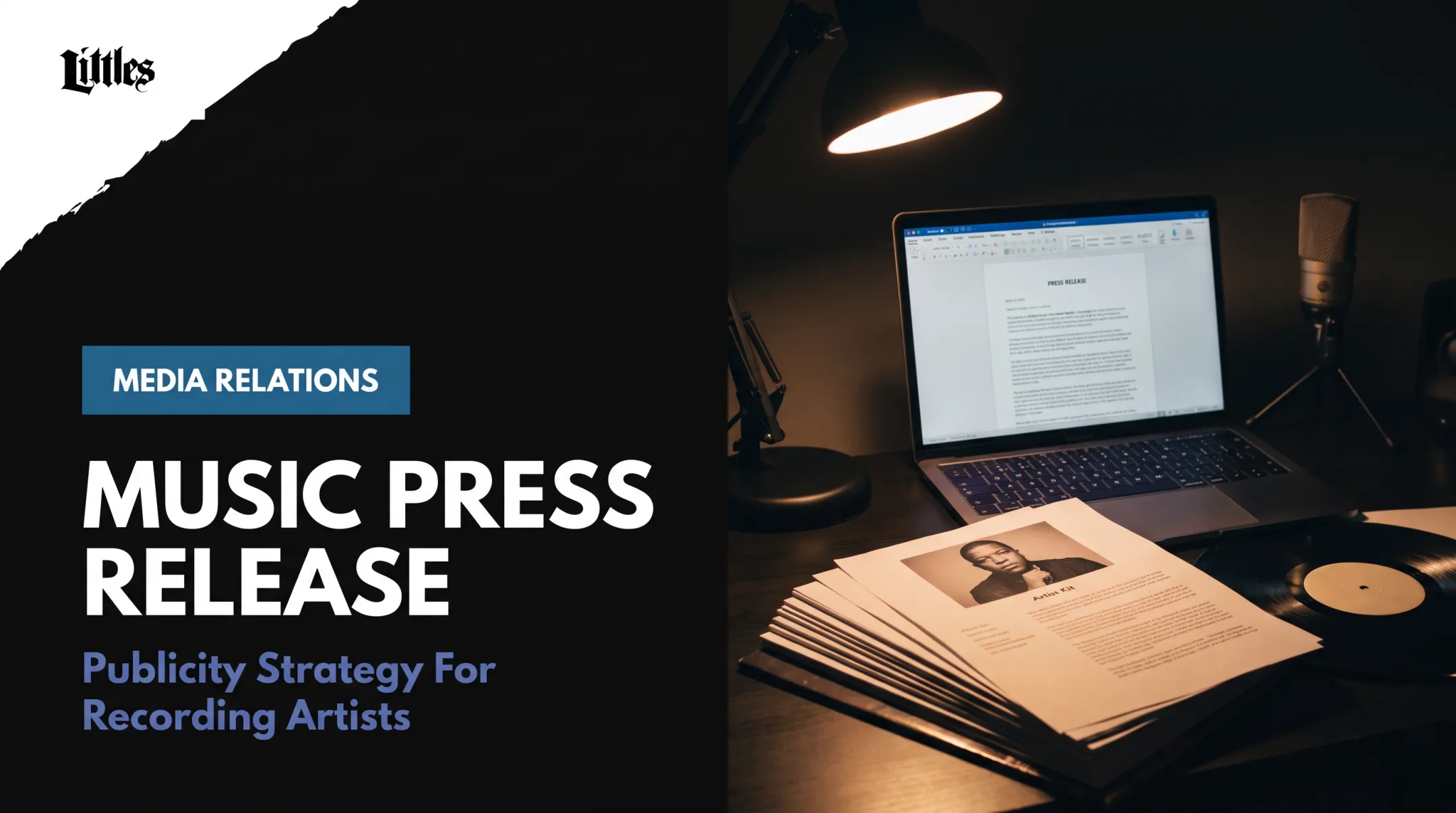

Introduction
A journalist scanning their inbox has about ten seconds to decide if your email matters. A music press release isn't a formality here. It's the tool that answers what's happening, why it matters, and whether it fits their audience, fast.
Most independent artists struggle with this. Writing objectively about your own work is hard. Finding the angle that makes a stranger care is harder. Add crowded inboxes and the logistics of coordinating music, artwork, links, and release dates, and it's easy to see why so many releases get ignored.
This guide breaks down when a press release makes sense, how to write each section, who to pitch, when to send it, and the mistakes that get releases deleted before the second sentence.
Key Takeaways
- A newsworthy release announces something timely, not a request to revisit old material.
- Lead with who, what, where, when, why, and how, then add context below.
- Personalize outreach to a short list of relevant writers instead of mass-blasting contacts.
- Pair every release with an organized EPK containing approved music, art, and photos.
- One clear angle beats five vague ones every time.
What Makes a Music Press Release Newsworthy?
A music press release is a factual, media-facing announcement built for journalists, not fans. That distinction matters. A bio tells your story. An EPK houses your assets. A social caption speaks directly to followers. A press release does none of those jobs. It exists to give a reporter the facts they need to decide whether your story fits their outlet.
Announcements Worth a Release
Not everything deserves one. Save the format for genuine news:
- A new single, EP, or album
- A music video premiere
- An upcoming tour date or hometown show
- A notable collaboration or feature
- A label signing or distribution deal
- A soundtrack placement or sync
- A charitable event tied to your music
- An award or verifiable milestone
Why Timing and Audience Fit Matter
A local blog cares about a hometown show. A genre-specific outlet cares about your sound, your scene connections, or the story behind a collaboration. Sending the wrong angle to the wrong outlet wastes both your time and theirs.
Before you write a single word, lock one central news angle. Skip "we're the next big thing." Lead with a concrete fact journalists can verify.
Use this quick filter:
- Can you state the news in one plain sentence?
- Does it match what that outlet actually covers?
- Would their readers care about it this week?
Facts sell the story. Superlatives don't. If you can't clear that filter, you're not ready to send anything yet.
How to Write a Music Press Release
Once you've nailed your angle, structure matters more than style. Journalists skim. Give them a document they can scan in fifteen seconds and understand in sixty.
Headline and Header Block
Your headline should name the artist and the announcement directly. Skip vague titles like "Rising Star Drops New Heat" in favor of something specific: "TSE Rizzle Releases Charisma Don, Featuring Moneybagg Yo." Avoid excessive punctuation and unsupported claims.
Below the headline, stack the essentials so they're immediately visible:
- Release timing: FOR IMMEDIATE RELEASE or embargoed until [date]
- Artist name and announcement
- Location or event details, if relevant
- Media contact name, phone, and email
The Opening Paragraph
Open with the who, what, when, where, why, and how in two tight sentences. If a journalist only reads this block, they should still have the story.
Consider how TSE Rizzle's team might frame Charisma Don: the Gary, Indiana rapper's latest project features Moneybagg Yo on "Granny House 1.2," alongside tracks like "Beat Build" and "Playa," positioning him as a voice for the Midwest. Collaborator, track titles, hometown, and creative angle land in one breath.

Middle Paragraphs and Quotes
Use the middle section for context that supports the story, not filler:
- The creative concept behind the project
- Relevant background, like TSE Rizzle's roots on Gary's West Side
- Notable credits, collaborators, or prior coverage
- Performance history or community ties
After that context, add one short quote from the artist, producer, or a collaborator. It should add insight, not repeat the headline.
TSE Rizzle has described his sound this way: "My trials and tribulations growing up in the streets plays a big role in the music I make, that's why my music is so heartfelt and doesn't sound like other artist."
Confirm every quote and name before anything goes out.
Close, CTA, and Boilerplate
End the release so a writer knows exactly what to do next:
- Clear call to action (stream link, interview offer, photo download, RSVP)
- Media contact name, phone, and email repeated from the header
- Short boilerplate on the artist or project
- Links to the website, music, and socials
What to Include in the Music Press Release and EPK
Keep the release itself lean. Everything else belongs in your EPK or media page.
Your Asset Checklist
- High-resolution, approved artist photos
- Cover artwork and any promotional graphics
- Direct links to music and video (Apple Music, Spotify, YouTube)
- Credits, and lyrics if relevant to the story
- Show details, if applicable
- Social links and website
- A contact who responds quickly
The release should stay easy to read. Large files, multiple photos, and video links belong in a reliable EPK or landing page with clearly labeled sections, not stuffed into an email attachment.
Visual Consistency Matters
Cover art, posters, and social graphics should use consistent names, colors, logos, and imagery. A mismatched press kit looks unfinished, and journalists notice. Design consistency does the work before anyone reads a word. Album covers, promotional posters, and brand graphics that match across every channel make a release look credible on first glance.
Best of the Block builds cover artwork and promotional graphics for artists, labels, and entertainment projects. Its portfolio includes album covers and posters tied to major-label releases, which helps when visual presentation is the weak spot in your press materials. Those assets belong in the EPK journalists actually open.

Before sending anything, confirm:
- Permissions and image credits
- Explicit-content labeling
- Collaborator approvals
- Every link actually works
How to Send a Music Press Release and Pitch Journalists
The press release and the pitch email are not the same document. The email is short and personal. The release carries the full announcement.
Building a Targeted Media List
Skip the mass blast. Research each outlet's:
- Genre coverage and location
- Audience size and focus
- Submission instructions and preferred format
- Recent articles that match your story type
- Calendar deadlines for shows or events
Writing the Pitch
NPR Music's editorial guidance recommends stating your central angle clearly, explaining why the story matters now, and keeping the message to two or three short paragraphs. A subject line that names the outlet's specific interest works better than a generic announcement blast.
Make the journalist's job easy:
- Lead with one clear angle, not three competing ones
- Include direct links, not attachments, unless requested
- Point to an accessible EPK
- Name a real contact who can answer questions same-day
Follow the outlet's stated preference on attachments versus inline text versus submission forms.
Don't skip the smaller outlets either. Realistic outreach mixes local, regional, genre-specific, radio, podcast, and specialist media. National press rarely responds to unsolicited pitches anyway.
When to Send a Music Press Release and How to Follow Up
Lead time varies wildly by outlet and by announcement type. Sonicbids' reporting on music journalist workflows notes typical windows like:
- Full-length album coverage: two to three months of advance notice
- Tour announcements: four to six weeks
- New video or remix: as little as a few days
Research each target outlet's specific lead time rather than assuming a single rule applies everywhere. Send early enough for editorial planning, but keep the announcement genuinely timely; nobody wants a "new single" pitch for a song that dropped three weeks ago.
A simple follow-up process:
- Wait 5–7 business days after your first email
- Send one concise reminder with the original links attached
- Stop reaching out if the writer declines or goes quiet after that
No reply doesn't mean rejection. It might mean a busy week, a full editorial calendar, or a story still in consideration. Monitor the outlet's site and socials for coverage. Don't pressure the writer for a status update.

Common Music Press Release Mistakes and Final Checklist
Most rejected releases share the same problems:
- Burying the news below paragraphs of backstory
- Running long when most guidance points to one page, under roughly 500 words
- Sending a generic mass pitch with no personalization
- Attaching oversized files without checking preferences first
- Including broken links that weren't tested before sending
- Leaning on hype language instead of facts
- Contacting outlets that don't cover your genre or story at all
If your release doesn't have a timely hook, don't send it yet. Rebuild the angle around a specific event, milestone, collaboration, or local connection first.
Pre-Send Checklist
- Facts checked, dates confirmed
- Headline is specific, not vague
- Names, credits, and titles are accurate
- Quotes approved by everyone quoted
- Contact details are current
- All links tested and working
- Images approved for use
- Visual branding consistent across assets
- Clear next step included for the journalist
Frequently Asked Questions
How much does an EPK cost?
Costs vary widely depending on whether you build it yourself, use a template, or hire a designer for custom work. A simple, well-organized media page with the right assets can work just as well as an expensive custom build.
Do press releases still exist?
Yes. They remain useful as organized, factual source material for journalists. They work best paired with a short, personalized pitch email and an accessible digital media page, not sent alone.
How long should a music press release be?
Keep it focused: one page is ideal, prioritizing the announcement and essential facts. Move biography, credits, and extra assets into your EPK instead of padding the release itself.
When should I send a music press release for a new song?
Timing depends on the outlet and the announcement type. Research each publication's editorial deadlines, and build in time for review, follow-up, and any calendar requirements for events.
Should I attach a music press release to an email?
Follow the recipient's stated preference first. When in doubt, reduce friction with inline text or a link to a clean media page instead of sending unsolicited large attachments.