
What Are Music Promoters?
Ask ten people what a music promoter does, and you'll get ten different answers. Some picture the person who books a tour and takes on financial risk if tickets don't sell. Others think of someone pushing a new single to blogs and radio. Both are right—and that overlap is what confuses artists.
"Music promoter" covers several distinct jobs, each with different responsibilities, payment structures, and risk. If you're an artist or label about to hire one, that ambiguity creates real problems: unclear scope, surprise fees, and no way to tell a pro from someone chasing an upfront check.
Before you sign anything, get clear on:
- What this person will actually handle
- How they get paid
- How to spot a legitimate professional versus a fee-chaser
This guide breaks down the types of promoters working in the US market, what each one handles, how they're typically paid, what belongs in a contract, and the warning signs that a "promoter" isn't who they claim to be.
Key Takeaways
- Live-event promoters run the show; digital or release promoters drive discovery and campaign reach.
- Confirm scope in writing—venues, marketing, ticketing, production, budgets, and settlement.
- Vet experience, deliverables, payment terms, and references before you sign.
- Cover art, posters, and social graphics support a campaign—they aren't promotion by themselves.
What Does a Music Promoter Do?
A music promoter is the person or company responsible for attracting an audience and coordinating the commercial mechanics behind a music campaign or live event. What that looks like in practice depends heavily on which side of the business they work in.
Live-Event Promoters Carry the Financial Risk
A concert promoter funds, organizes, markets, and executes the show. According to Berklee's career overview of the role, that includes booking the venue, negotiating terms with the artist's booking agent, building a localized marketing plan, managing production, and handling settlement after the show, including revenue splits and merchandise deductions.
That's a lot of moving parts:
- Selecting a venue that fits the artist's draw
- Negotiating the deal structure (flat fee, percentage, or guarantee)
- Pricing tickets and running the marketing campaign
- Coordinating production, security, and day-of logistics
- Settling payment once the show wraps
Release and Digital Promoters Build Audience Discovery
A digital or release promoter works on a different timeline. Instead of one night, they run a multi-week or multi-month campaign built around the artist's identity and target audience.
Typical work includes:
- Planning social content and rollout timing
- Running media outreach and press pitches
- Managing paid advertising against clear audience targets
- Tracking analytics and adjusting the campaign in real time
Live and Release Promotion Can Happen at Once
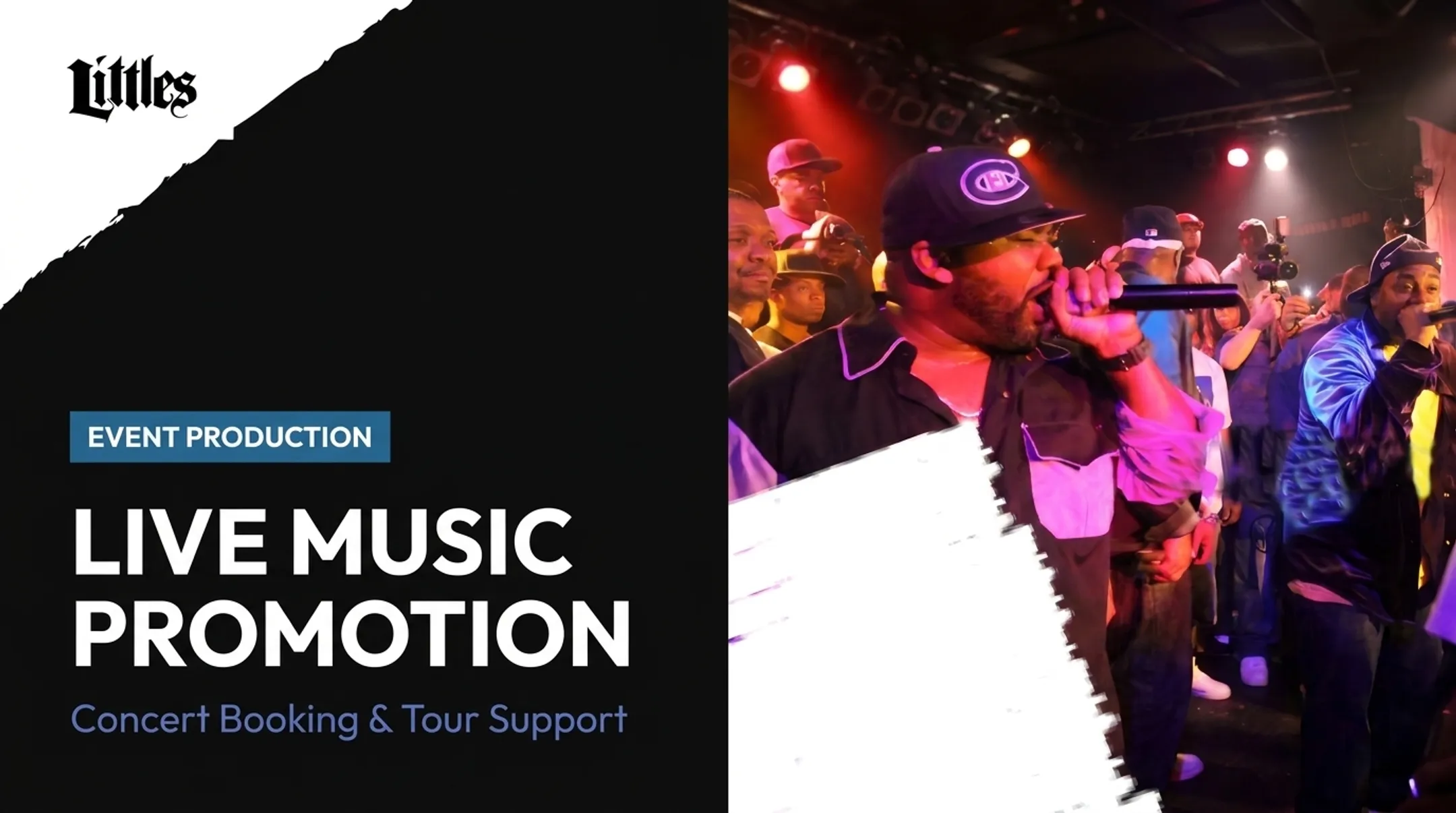
Take a real example. In 2004, Alfredo "Littles" Bryan — now the founder of Best of the Block, with 27 years in the music industry — booked and filled half of Mobb Deep's 112-date one-nighter tour while simultaneously serving as a liaison between the group, Jive Records, radio, retail, and press for the Amerikaz Nightmare campaign. That's a live-event promoter and a release promoter, doing both jobs for the same artist at the same time.

How This Differs From Other Roles
The lines blur because these jobs overlap:
- Booking agents secure performance opportunities and negotiate with promoters on the artist's behalf
- Artist managers guide overall career strategy
- Publicists pursue media coverage
- Talent buyers decide which acts a venue books
A promoter can wear more than one of these hats. The core job stays constant: evaluate whether an artist, release, or event can draw a paying audience, then build the plan to make that happen.
Types of Music Promoters
One promoter can cover more than one of these roles. In the US market, the main categories break down like this:
| Type | What They Handle | Example |
|---|---|---|
| National/regional concert promoters | Large tours, festivals, arenas, and amphitheaters across multiple markets | AEG Presents via The Bowery Presents, PromoWest |
| Independent/local promoters | Rent venues, build local lineups, run ticket campaigns, absorb more financial risk | Regional clubs and single-market shows |
| In-house venue promoters/talent buyers | Manage a venue's calendar, book acts, balance sales with venue goals | Club or theater booking teams |
| Digital/release promoters | Campaign strategy, ads, media outreach, and audience growth for a release | Single or album rollout campaigns |
| Brand/entertainment campaign promoters | Coordinate artists, sponsorships, and activations while protecting creative identity | Brand partnership activations |
Independent promoters compete on relationships rather than budget. Pollstar's 2019 survey of independent promoters found that smaller operators lean on deeper local audience ties, more flexible deal structures, and tightly focused marketing, since they aren't buying entire tours the way national promoters do.
Which type fits your situation:
- Independent artist with a small following: independent/local promoter or digital promotion service
- Label launching a roster: mix of digital promoters and regional concert promoters
- Mid-career artist rebuilding momentum: independent promoter who can move fast on a comeback
- Brand seeking credible hip-hop access: brand/entertainment campaign promoter with existing artist relationships
Best of the Block's touring and booking work carried Raekwon's Only Built 4 Cuban Linx… Pt. II — the Purple Tape — through to a star-studded release party hosted by P. Diddy at Santos Party House in NYC—a clear example of what relationship-driven, independent-style promotion looks like in practice.
Why Artists and Music Teams Hire Promoters
Most artists don't hire a promoter because they want to hand off control. They hire one because they've hit a wall.
Common reasons to bring in a promoter:
- Limited time to chase venues, media contacts, or ad campaigns while also writing and performing
- No existing relationships with venues, buyers, or press outlets in a target market
- An event or campaign that has outgrown what the artist's team can execute alone
- A push into a new city, region, or audience segment
Signs You're Actually Ready
A promoter can't manufacture readiness. Before reaching out, an artist or team should have:
- Finished music or a locked event plan
- Clear, specific goals, not just "get bigger"
- Usable promotional assets, including photos, artwork, and a bio
- A basic understanding of who the target audience actually is
- A realistic budget, even a modest one
Hiring a promoter doesn't remove the artist's own marketing responsibilities. Content still needs to come from the artist, messaging still needs approval, and fans still expect the artist to show up online. Deadlines still need to be met on both sides.
When It's Too Soon
A few signs a promoter search is premature:
- The project isn't finished
- Goals keep shifting week to week
- No approved artwork or press photo ready to send
- The expectation is guaranteed exposure rather than a strategy
Visual identity matters here too. A polished cover, poster, or social graphic won't promote a release on its own, but it gives a promoter something professional to work with. Teams often turn to partners like Best of the Block for cover art and promo graphics so the rollout looks consistent before outreach starts.
How to Choose and Work With a Music Promoter
Start With a Clear Ask
Before you reach out, lock three things in place:
- Your campaign goal
- The promoter type that fits that goal
- A short list of pros with matching genre or audience experience
A first message should include:
- Artist or company name, genre, and campaign or event type
- Release or event date and target market
- Venue details, if applicable
- Audience information and promotional assets on hand
- Budget range and the specific outcome you want
Vet Their Track Record
Ask for proof, not promises:
- Verifiable past campaigns or shows
- References from artists or venues they've worked with
- Sample reporting from a previous project
- Experience with comparable genres or audience sizes
A credible promoter asks detailed questions about audience, budget, and timeline. Guarantees on streams, press placements, or ticket sales up front usually signal a sales pitch, not a pro.

What a Solid Proposal Covers
Once you're discussing strategy, the proposal should spell out:
- Target audience and channels
- Timeline and who's responsible for what
- Content requirements and advertising approach
- Ticketing or conversion path
- Reporting schedule and how success gets measured
Outreach Without Wasting Anyone's Time
Send a short, professional introduction with the details above. Follow up once if you don't hear back—then stop. Come to the discovery call with goals and numbers ready.
Skip mass emails. A handful of relevant contacts beats fifty cold blasts.
Have your creative package ready before you pitch:
- Approved artwork and a current press photo
- Bio, links, and social handles
- Logos or event details, if they apply
If you still need that visual package, Best of the Block builds album covers, posters, and brand graphics artists use when they start promoter outreach.
Costs, Contracts, and Red Flags
There's no single "going rate" for a music promoter. Cost depends on the promoter's type, campaign scope, audience size, event risk, market, timeline, ad spend, and how compensation is structured. If someone quotes a flat number without asking about your project, they're skipping a step.
What Drives the Cost
- Live events: venue cost, marketing spend, ticket pricing, production overhead, and merchandise deductions all factor in
- Release campaigns: scope of content, ad spend, reporting depth, and campaign length shift the price
- Compensation models: flat fees, ticket-sales percentages, guarantees, guarantee-plus-backend deals, and advances tied to sales performance
For reference, Best of the Block's marketing and rollout campaigns for artists typically run $3,500 to $5,000 per month, depending on scope. Treat that as a mid-tier benchmark—and insist every quote is itemized for your project.

What Belongs in a Contract
Once you understand the cost drivers, lock them into writing. A solid agreement should cover:
- Parties involved and their roles
- Services and deliverables
- Timeline and who controls the budget
- Advertising approvals before spend
- Ticketing and revenue treatment
- Payment schedule and cancellation terms
- Rights to creative materials, reporting cadence, and dispute procedures
Red Flags
Walk away—or renegotiate hard—if you see:
- Unexplained upfront payments
- Vague deliverables
- Pressure to sign immediately
- Unverifiable testimonials
- Promises of guaranteed results
- Pay-to-play requirements
- Refusal to put terms in writing
Pay-to-play or "buy-on" deals—where you pay upfront or buy tickets just to get a slot—are a warning sign, not a normal cost of doing business, according to entertainment attorney Brian Witkin in the San Diego Troubadour.
Legitimate performance-based risk looks different. A percentage deal tied to actual ticket sales is standard. A demand for cash before any work happens is not.
Visual design, ad spend, venue expenses, artist fees, and promoter compensation are often separate line items. Don't assume one quoted number covers everything.
Frequently Asked Questions
How much does music promotion cost?
Cost depends on campaign type (live event or release), scope, market, promoter experience, and pay model. Request an itemized proposal rather than a flat quote.
Do music promoters get paid?
Yes, through flat fees, commissions, guarantees, profit shares, or a combination. Your agreement should state exactly when and how that payment gets calculated.
What does a music promoter do?
A music promoter connects music with an audience, whether through live event planning, marketing, venue or partner coordination, or campaign execution. Exact deliverables depend on the type of promoter and the agreement.
How do I reach out to music promoters?
Identify the right promoter type for your goal and prepare a short professional summary with your creative assets. State your timeline and target outcome, then send a personalized inquiry with relevant links.