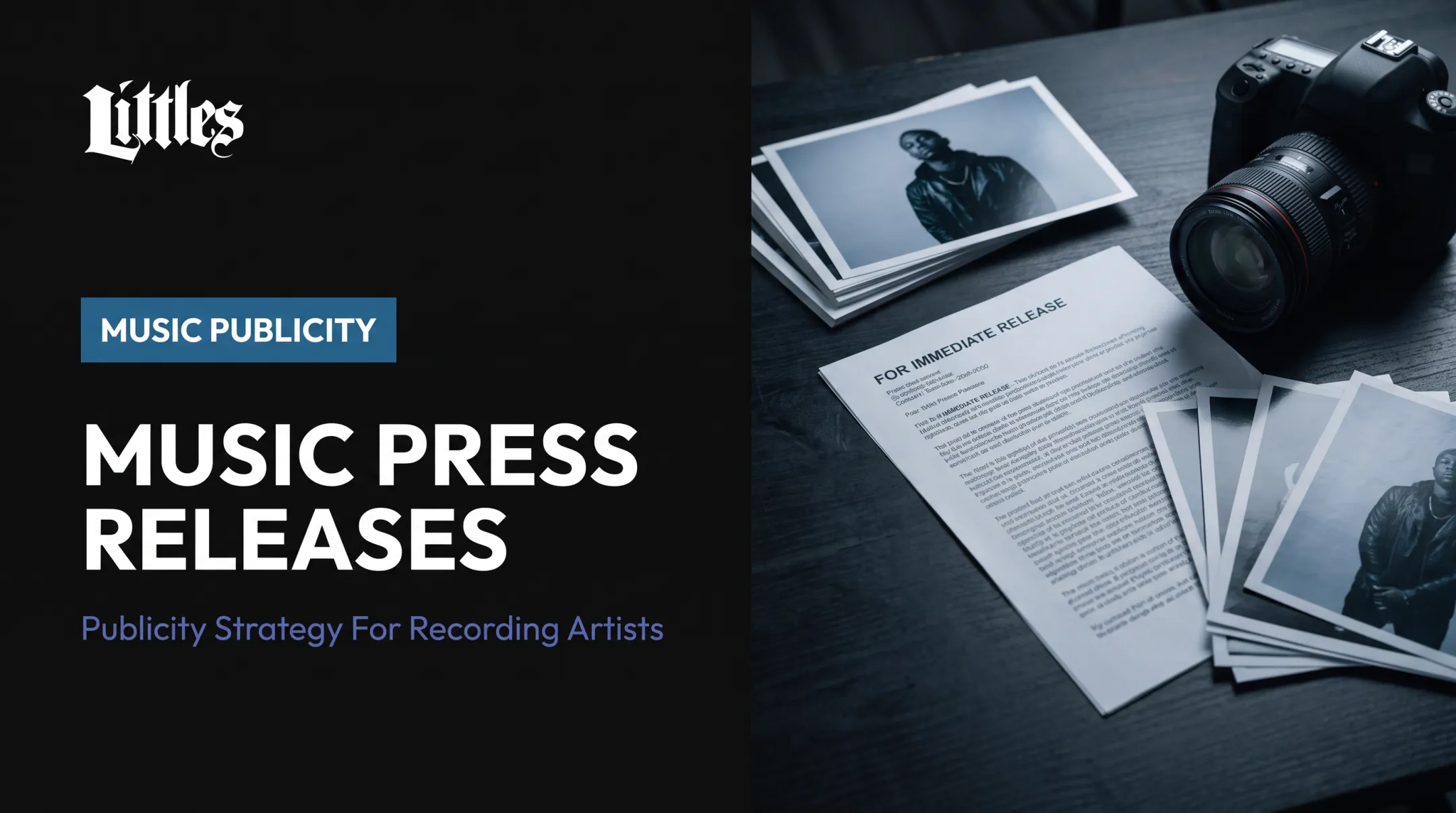

A music press release solves that. It's a concise announcement that tells media contacts exactly why your latest news matters right now. Many artists struggle here because they lead with vibes instead of facts. No timely hook, no usable details, no clear story.
This guide walks through the whole process: finding your angle, writing a release journalists will actually read, packaging the right assets, and sending it to people who'll respond.
Key Takeaways
- A press release announces something genuinely new, not music that's been streaming for six months.
- Your headline and opening paragraph should carry the strongest facts and the real story angle.
- Keep it factual, scannable, and paired with a personalized pitch, not a mass blast.
- Always include working streaming links, artwork, and direct contact information.
When Does a Music Announcement Need a Press Release?
Not every update deserves one. A press release works when there's an actual news hook, something a journalist could write about beyond "new song out now."
Announcements that typically justify a press release:
- A new single, EP, or album
- A music video premiere
- A tour or festival appearance
- A major collaboration or feature
- A label signing
- An award or soundtrack placement
- A charity project or significant career milestone
Hypebot's guide to music press releases draws a clear line here: a new album or tour announcement is newsworthy. A routine local gig or "back in the studio" update usually isn't, unless something specific makes it stand out.
Finding Your Story Angle
Before writing anything, ask what makes this news distinctive:
- Timely – Does it connect to a current event, anniversary, or trend?
- Locally relevant – Does it tie to a specific city or scene?
- Culturally relevant – Does it reflect something happening in the genre right now?
- Personally meaningful – Is there a real story behind why this release exists?
Take TSE Rizzle, a rapper from Gary, Indiana's West Side, working with Best of the Block. His release CHARISMA DON features "Granny House 1.2" with Moneybagg Yo.
The usable angle is an independent Gary artist landing a feature with a chart-topping name, backed by a manager with two decades in the industry. That's a story a regional outlet or hip-hop blog can actually run.
When You Don't Need One
Skip the press release for:
- Routine social media posts
- An older release with no new development attached
- Local gigs or "back in the studio" updates with no standout hook
If there's no real hook, don't force one. But sometimes a small update can become newsworthy with the right framing. An older single suddenly placed in a soundtrack, or hitting a streaming milestone, gives you a legitimate reason to reach out again.
How to Write a Music Press Release Step by Step
Once you've confirmed there's a real story, structure matters. PR Newswire's 2025 guide recommends headlines stay at or below 100 characters, since longer ones see sharply reduced views.
Headline and Dateline
Name the artist, use an action verb, state the news. No vague teasers.
- Single: "[Artist Name] Releases New Single '[Title]' Featuring [Collaborator]"
- Album: "[Artist Name] Announces New Album '[Title],' Out [Date]"
- Tour: "[Artist Name] Announces [Number]-City Tour Starting [Month]"
- Video: "[Artist Name] Drops Official Music Video for '[Title]'"
Follow the headline with a dateline (city, state) and a release label, either "For Immediate Release" or a specific release date.
Lead, Body, and Quote
The opening paragraph does the most work. Answer who, what, when, where, and why in the first lines. If a writer stops there, they should still leave with the core news.
Example lead:
GARY, IN — TSE Rizzle, a rapper from Gary's West Side, has released CHARISMA DON, a new project featuring "Granny House 1.2" with Moneybagg Yo, available now on Apple Music.
Use the middle section for context journalists can build on:
- Sound and themes of the release
- Inspiration behind the project
- Collaborators, producers, or label involvement
- Release logistics (date, tour stops, ticket info)
- Why this story is worth covering now
Then add one real quote from the artist, manager, or producer. It should add perspective, not repeat the facts above—emotion, backstory, or a detail readers cannot get from the track list alone.
TSE Rizzle has described his sound this way: "My trials and tribulations growing up in the streets plays a big role in the music I make, that's why my music is so heartfelt and doesn't sound like other artist." That kind of line gives a journalist an angle beyond the announcement.

Boilerplate and Contact
Close with a short boilerplate on background, genre, and verified achievements. Keep it factual.
Avoid:
- Exaggerated superlatives ("the best album of the year")
- Unverifiable claims
- Copy that reads like an ad instead of news
End the release with a clear close:
- A direct link (streaming, ticket page, or press kit)
- Interview availability
- Contact name, email, and phone number
- Official website
Music Press Release Format, Assets, and Examples
Journalists skim. A dense or cluttered release gets ignored. Keep it to one page: bold headline with artist, title, and date; short paragraphs; clear spacing. DIY Musician/CD Baby's press release guide follows the same structure.
Format basics:
- One page, scannable
- Short paragraphs, generous white space
- Readable typeface
- Most important information near the top
- Header with artist name and contact info
Example headline: Maya Brooks Shares New Single "Night Shift" — Out March 14 on Every Major Platform
Attach or link these assets with the release:
- 2–3 high-res press photos (no watermarks)
- Cover art in print-ready resolution
- Private stream of the track or project
- One-sheet or EPK link for bio and credits
Which Links to Include
Match the primary link to the announcement:
| Announcement Type | Primary Link |
|---|---|
| Single or album | Streaming platform (Apple Music, Spotify) |
| Music video | YouTube or official video link |
| Tour | Ticket purchase page |
| General background | Artist website or EPK |
For music delivery specifically, use a private streaming link (Bandcamp, SoundCloud, or similar) rather than an MP3 attachment or a Google Drive folder. Journalists don't want to download files to hear your song.
Press Release vs. Pitch Email vs. EPK
These three get mixed up constantly. Use each for a different job:
- Press release: the news in journalist-ready format
- Pitch email: a short, personalized note to one specific contact
- EPK (electronic press kit): a hub with bio, photos, links, and social profiles
Visual Assets Matter
Link to high-resolution photos, cover artwork, and logos instead of attaching oversized files. A journalist should be able to click, download, and go.
Visual consistency across cover art, promo graphics, and press photos shapes how an artist is perceived at first glance. Best of the Block creates cover artwork and promotional visuals for artists and labels, so the assets you send with a release match the rest of the campaign.

Emphasis by Release Type
- Single: track details, collaborators, streaming link
- Album: tracklist context, producers, release date, listening link
- Tour: dates, cities, venues, ticket link
- Music video: visual concept, director, YouTube link
How to Send and Follow Up on a Music Press Release
Writing the release is half the job. Getting it to the right person, at the right time, is the other half.
Build a Targeted Media List
Research contacts who've covered similar artists recently:
- Genre-specific blogs and publications
- Local outlets in the artist's home market
- Radio programs and college radio stations
- Playlist editors on relevant platforms
Best of the Block's publicity work leans on relationships built with indie and major print, online, television, and radio outlets over two decades. That kind of standing list is exactly what makes targeted pitching faster than cold outreach.
Write a Short, Personalized Pitch
Explain why this specific announcement fits that contact's beat. Place the release directly in the email or link to it, based on what the recipient prefers.
Plan Your Lead Time
Timing varies by outlet and format:
- General press: At least three weeks, per Hypebot's coverage guide
- Release-day coverage: Four weeks minimum
- Playlist editors (Spotify, Apple Music): At least four weeks for official playlist consideration
- Local press: Can work on a 1-2 week turnaround
- National outlets: Often need a month or more
Distribution Channels Compared
| Method | Best For | Trade-off |
|---|---|---|
| Direct pitching | Targeted, relevant coverage | Time-intensive, requires research |
| Paid distribution service | Wide reach, tracking | $29-$1,999 depending on tier; no guaranteed placement |
| Owned newsroom/website | Permanent public record | Doesn't reach new audiences alone |
Follow Up Without Overdoing It
Wait about a week before following up. When you do:
- Keep it brief and add something new (an interview offer, updated detail, or fresh asset)
- Stop after two attempts if there's no response
Track replies, coverage, referral traffic, and playlist attention to see what's working.

The Bottom Line
A music press release is a focused document that makes your announcement easy for the right person to understand and use. It supports the release; it does not replace the music or act as a paid ad.
Before you hit send, run this checklist:
- Confirm there's a genuine news angle
- Verify every name, date, and detail
- Test every link
- Review all visuals for consistency
- Personalize the pitch
- Send only to contacts who cover this kind of story
If those six hold up, your release is ready to work—clear enough to quote, complete enough to trust, and aimed at people who can move it.
Frequently Asked Questions
How much does it cost to issue a press release?
Costs vary widely depending on whether you write and pitch it yourself, hire a writer, or use a paid distribution service. Compare targeting, editorial support, and placement quality rather than focusing on price alone.
What are the 5 W's in a press release?
Who, what, when, where, and why. These facts need to appear clearly in the opening paragraph of any music press release.
What is a press release for an album?
It's a news announcement covering the album's creative story, release date, collaborators, listening links, and relevant artist background, written so a journalist can use it quickly.
How long should a music press release be?
Keep it concise and scannable, generally fitting on one page. Newsworthiness and clarity matter far more than hitting a specific word count.
When should I send a music press release?
Timing depends on the announcement type and each outlet's lead-time needs. Research individual publications and leave room for a respectful follow-up.
What should be included in a music press release?
Include a headline, dateline, the 5 W's, supporting details, one authentic quote, an artist boilerplate, relevant links, media assets, a call to action, and verified contact information.