
Introduction
A great song can still fall flat if nobody handles the release right. Music record label management connects creative direction with the operational side of a release: marketing, distribution, finances, and artist relationships.
Many independent artists and small labels run into the same problem. The music is strong, but the system around it often isn't:
- Timelines slip and dates keep moving
- Assets go missing across folders and threads
- Budgets go untracked until costs overrun
- Promotion lands in scattered bursts instead of one coordinated push
Momentum fades when that operational backbone was never built.
This guide breaks down the difference between label management, artist management, and publishing. Then it walks through a practical release-management framework built for the US music market, covering workflow, deal structures, financial controls, team communication, and how to evaluate a management partner.
Key Takeaways
- Label management turns a finished recording into a coordinated commercial release through planning, execution, and measurement
- Success requires both creative sensitivity and operational discipline: clear owners, deadlines, and approvals
- Contracts, royalties, and recoupment terms need review from qualified US music-business attorneys, not guesswork
- Independent teams can build structured systems without hiring a full in-house staff on day one
What Does Music Record Label Management Involve?
Music record label management is the coordination of a label's artists, recordings, releases, commercial strategy, creative assets, partners, and financial administration. It's the operating system that turns a finished recording into a planned release.
Label Management vs. Artist Management vs. Publishing
These three functions get confused constantly, but they answer different questions:
- Label management asks: how do we release this project successfully?
- Artist management represents the artist's broader career, guiding decisions across labels, brands, and opportunities. Berklee's career guide describes the artist manager's role as counseling on professional decisions and overseeing day-to-day career matters.
- Publishing administers the underlying composition, meaning the lyrics and melody, separate from the recorded performance. The US Copyright Office treats musical works and sound recordings as distinct, separately owned works.
Core Functions of a Label Manager
A label manager typically handles five overlapping jobs:
- A&R and project selection — evaluating music, audience fit, timing, and whether the label can actually support the release
- Release strategy — setting objectives, identifying the audience, choosing formats, and coordinating distribution and publicity
- Operations — maintaining schedules, collecting metadata, and keeping every partner aligned
- Commercial administration — tracking budgets, advances, expenses, and royalty obligations
- Relationship management — communicating with producers, distributors, publicists, and platforms
At a major label, these duties get split across departments. At an independent label, one person often wears all five hats or hands pieces to contractors. Independent labels often bring in outside rollout, marketing, and PR partners to cover the gaps. Either way, label management is the system that gets the right people, assets, and decisions lined up on time.
The Label Management Workflow: From Project Planning to Post-Release
A release doesn't run on hope. It runs on a timeline, and that timeline works backward from launch day.
Planning and the Backwards Timeline
Before anything moves, lock the basics:
- Release objective and target audience
- Format, delivery date, and budget
- Team roles, rights position, and final approval
Then build the schedule in reverse from the release date. Set milestones for:
- Recording completion and mastering
- Artwork and metadata delivery
- Distribution submission
- Publicity and content creation
- Launch-week communications
Add contingency time. Revisions, clearance questions, and late approvals hit almost every project — a timeline with zero slack breaks the moment something shifts.

Pre-Release Execution
This stage covers the unglamorous but essential details. Confirm each item before you submit:
- Final masters and clean versions where needed
- Credits, ISRCs, and songwriter splits
- Platform-ready assets
Miss one and a release can stall at the distributor, sometimes days before launch.
Marketing and Release Week
Marketing should function as one campaign, not a pile of disconnected posts. Define:
- Core message and priority audience
- Content themes and channels
Then assign every activity an owner, deadline, asset, and success measure.
During release week, one person should confirm platform availability, watch press and audience response, and escalate problems fast.
Post-Release Review
Collect streaming and revenue data, compare it against the original goals, and document what worked.
US recorded-music revenue hit $11,535.3 million in 2025, up 3.1%, with streaming responsible for $9,474.5 million of that total, according to RIAA's 2025 year-end report. That growth is real, but it's spread across a crowded market. Benchmark your results against your own goals, not industry averages alone.
Business, Rights, Deals, and Financial Controls
Before committing to a project, a label manager needs a working grasp of ownership, term, territory, exclusivity, advances, royalties, and termination rights. Deal structures vary widely, and each one changes who controls what.
| Deal Type | What It Typically Covers | Key Points for Artists |
|---|---|---|
| Traditional label deal | Label finances recording, marketing, and distribution | Label usually owns the masters; long-term commitment and extensive recoupment are common |
| Licensing deal | Label licenses the recording for a set period | Rights often revert after the license term; recoupment terms vary by agreement |
| Distribution deal | Distributor handles delivery, sometimes limited promotion | Artist keeps master ownership; often higher royalty share, but artist funds production |
| Label-services deal | Label provides services for a fee or cost recovery | Profit split usually calculated after approved costs are recovered |
| 360 deal | Covers touring, merchandise, brand deals, and more | Label's involvement may be active (controlling income) or passive (collecting a share) |
Always get independent legal advice before signing. Deal terms vary enormously, and this overview isn't a substitute for a US music attorney reviewing your specific contract.
Financial Controls Worth Setting Up Early
- Build a project budget that separates recording, mixing, artwork, marketing, distribution, and contingency
- Log every approval and invoice so project costs stay distinct from unrelated expenses
- Define royalty statement timing, payment schedules, and a process for resolving discrepancies
Know the money terms before you negotiate:
- Gross receipts: total income before deductions
- Net receipts: income left after allowed deductions
- Recoupable costs: approved expenses (often recording or marketing) subtracted before royalties are calculated
An artist's royalty is paid on what remains after those costs are recovered.
Clearance sits beside the money trail. Samples, featured artists, producers, artwork, and photography all carry rights that need documenting. Never rely on a text message or verbal promise for ownership, payment, or approval terms—put it in writing.

People, Communication, and Time Management
A typical independent release pulls in a full cast of roles:
- Artist, label manager, and artist manager
- Producer, distributor, and marketing lead
- Publicist, designer, and video team
- Lawyer and accountant
That's a lot of moving pieces. Without a clear structure, work gets duplicated or dropped.
A simple responsibility matrix or project brief solves most of this. It answers who owns each task and who approves it before disputes happen.
Once ownership is clear, protect the calendar by separating two kinds of work time:
- Maker time — uninterrupted blocks for recording, editing, and design
- Manager time — meetings, status updates, and administrative decisions
This distinction comes from Paul Graham's essay on the "maker's schedule versus manager's schedule," and it applies directly to label work. A single meeting dropped into the middle of a creative session can wreck the whole afternoon.
Keep communication tight with a few shared habits:
- Maintain one shared project tracker
- Send concise weekly updates
- Document decisions where everyone can see them
When creative disagreements come up, separate taste-based feedback from non-negotiables like rights compliance, budget limits, and deadlines.
How to Build an Efficient Label Management System
You don't need a large staff to run a tight operation. You need five documents:
- Artist or project brief
- Release timeline
- Budget tracker
- Asset and metadata checklist
- Post-release report
Pair that with basic file discipline: version-control rules for masters, artwork, contracts, and invoices so nobody uploads an outdated file the night before launch.
Before anything goes to distribution, run a quality-control pass covering:
- Audio specs and artwork dimensions
- Song titles, credits, and ownership documentation
- Explicit-content labels and working links
Take TSE Rizzle's CHARISMA DON, which shipped with a properly flagged Parental Advisory label and a working Apple Music link. Those details get checked before release day.
Hand off specialist production when you need it:
- Mastering
- Artwork production
- Video editing
Keep decision-making with the core team:
- Positioning
- Budget approval
- Final creative direction
Visual identity is one piece worth getting right. Best of the Block, drawing on 27 years in the music industry, supports album and mixtape artwork, promotional graphics, and consistent visual branding across a release campaign. That help matters when a label needs specialist creative production without hiring a full design department.
Who Needs Music Record Label Management Support?
Not every artist needs the same level of support, but most independent projects hit a point where informal management stops working.
- Emerging independent artists benefit from a realistic rollout plan and organized delivery instead of managing every task solo.
- Mid-career artists rebuilding momentum often need repositioning, refreshed creative presentation, and campaign planning.
- Small labels launching multiple artists need shared systems and consistent reporting across projects.
- Artist teams that already handle daily work sometimes just need senior-level strategic review.
- Brands entering hip-hop culture need proper talent relationships and cultural consultation, not a shortcut through paid placements.
A MIDiA Creator Survey of 450 artists found that 54% of full-time artists said breaking through the noise was their biggest challenge, according to Billboard's coverage. Another 31% preferred a distributor-plus-label-services route over a traditional deal.

Best of the Block fills that gap with Artist Management built on structured monthly development packages, plus rollout planning that starts around $5,000 a month. Both are built for artists who already have real music and need organized support behind the release.
How to Evaluate a Label Manager or Management Partner
Before signing with anyone, ask direct questions:
- Which services are included, and which costs are billed separately?
- What experience matches this specific project?
- Who actually does the work?
- How are conflicts of interest handled?
- How will success be measured?
Have legal counsel review the agreement line by line. At minimum, confirm:
- Scope, term, and compensation
- Expense handling and reporting obligations
- Approval process and termination rights
- Ownership of created assets—especially artwork and branding materials
Beyond the contract, assess working fit:
- Clear communication style and reliable responsiveness
- Transparency about realistic outcomes
- Respect for creative control
- A documented operating process—not just verbal promises
Ask for concrete examples of release planning, campaign coordination, and visual presentation—not generic claims. Look for partners whose background you can verify.
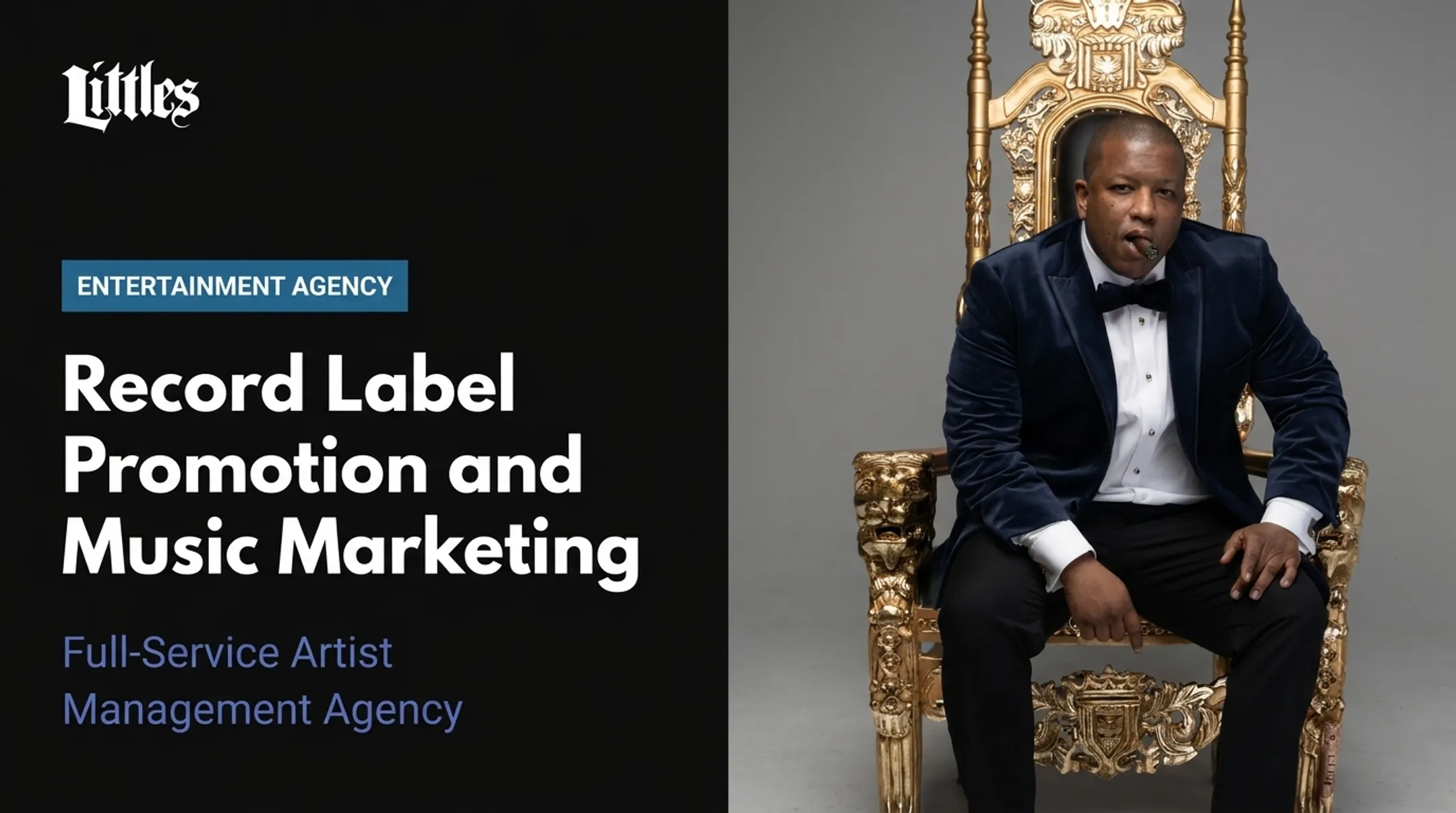
Alfredo "Littles" Bryan founded Best of the Block in 2002 and previously served as Senior VP of Mobb Deep's Infamous Records/Jive Records imprint, working as a liaison across labels, radio, and press. That kind of long-running relationship network is worth pressing on directly: who do they actually know, and what releases can they point to?
When visual identity matters to the rollout, review real portfolio work across artists, labels, and brand clients—cover artwork, promotional graphics, and broader branding—so you know the partner can deliver presentation quality, not just strategy talk.

Conclusion: Turning Label Management Into a Repeatable Advantage
Effective record label management comes down to disciplined coordination: music, people, rights, budgets, assets, and communication, all moving on the same timeline.
Start with the fundamentals:
- Define the project objective
- Confirm rights and responsibilities
- Build a backwards timeline
- Assign clear owners
- Document every approval
- Review results honestly after release
Independent artists, labels, and entertainment projects don't need to build this system alone. Best of the Block offers project rollout, marketing, and creative support for teams ready to run release operations with the same discipline they bring to the music.
Frequently Asked Questions
How much do label managers earn?
Pay depends on employment status, label size, experience, location, and whether bonuses or commissions are included—indie roles usually sit below major-label seats. Check current U.S. salary data for ranges that match your market and title.
Who are the big 3 major labels?
The three major global music companies, commonly called the "big three," are Universal Music Group, Sony Music Entertainment, and Warner Music Group, according to Billboard. Ownership and subsidiaries change over time, so confirm current details before you cite them.
What is the difference between a record label manager and an artist manager?
A label manager handles the label's release and business interests. An artist manager advises and represents the artist's broader career. Responsibilities can overlap depending on the specific agreement in place.
What does a record label manager do for an independent artist?
Typical support covers release planning, distribution, marketing, budgeting, metadata, creative assets, partner outreach, and reporting. Exact scope always depends on the agreement.
Do independent artists need a record label manager?
Outside management helps most when an artist has a budget and team but lacks operational bandwidth. Smaller, early-stage releases can often be handled with a well-organized self-management approach instead.
What should artists look for in a record label management agreement?
Review scope of services, term, compensation, expenses, rights, recoupment, approval process, reporting, conflicts of interest, and termination rights. Always get independent legal review before signing anything.