
Introduction
Marketing for a band means helping the right listeners find, trust, and act on your music, shows, and releases. Posting more rarely moves the needle. What works is connecting specific people to a specific reason to care.
Many bands struggle because they treat every platform and every fan the same way. Results hinge on positioning, audience fit, visuals, timing, channel choice, and consistency—not raw post volume.
Even loyal fans behave differently than casual listeners. Spotify reports that super listeners make up just 2% of an artist's monthly audience, yet account for more than 18% of monthly streams. That gap is the whole game: reach without depth rarely pays off. A clear promotion system is how you close it.
This guide covers a practical, U.S.-focused framework: building a campaign, choosing channels, sequencing releases and shows, measuring results, avoiding common mistakes, and finding lower-cost options when budget is tight.
Key Takeaways
- Lock one audience and one campaign goal before you pick platforms or spend a dollar
- Use one visual identity and one hub for music, tickets, merch, press, and email
- Stack owned, earned, paid, live, and collab channels instead of betting on one platform
- Track qualified traffic, signups, streams, and ticket sales, not follower counts
How to Build a Band Promotion Campaign
A promotion campaign works best when it's broken into deliberate steps rather than run as one continuous scramble before release day.
Step 1: Define Positioning, Audience, and Objective
Start by identifying your genre, influences, story, and what actually separates you from comparable acts in your market.
- Split your audience into groups: casual listeners, engaged fans, ticket buyers, and industry contacts like venues, press, or labels
- Pick one primary objective per campaign: single awareness, pre-save activity, ticket sales, email growth, or press attention
- Research comparable artists using Spotify's audience segments, Chartmetric, or SoundCloud Insights to see where your audience already spends time
Step 2: Prepare Brand and Promotional Assets
Build a basic brand system first: band name, logo, colors, typography, photo direction, and a consistent tone of voice across every profile and listing.
Then assemble your campaign essentials:
- Mastered audio and finished cover artwork
- Short and long bios, press photos, and an electronic press kit (EPK)
- Streaming links, show details, vertical video, and lyric or story assets
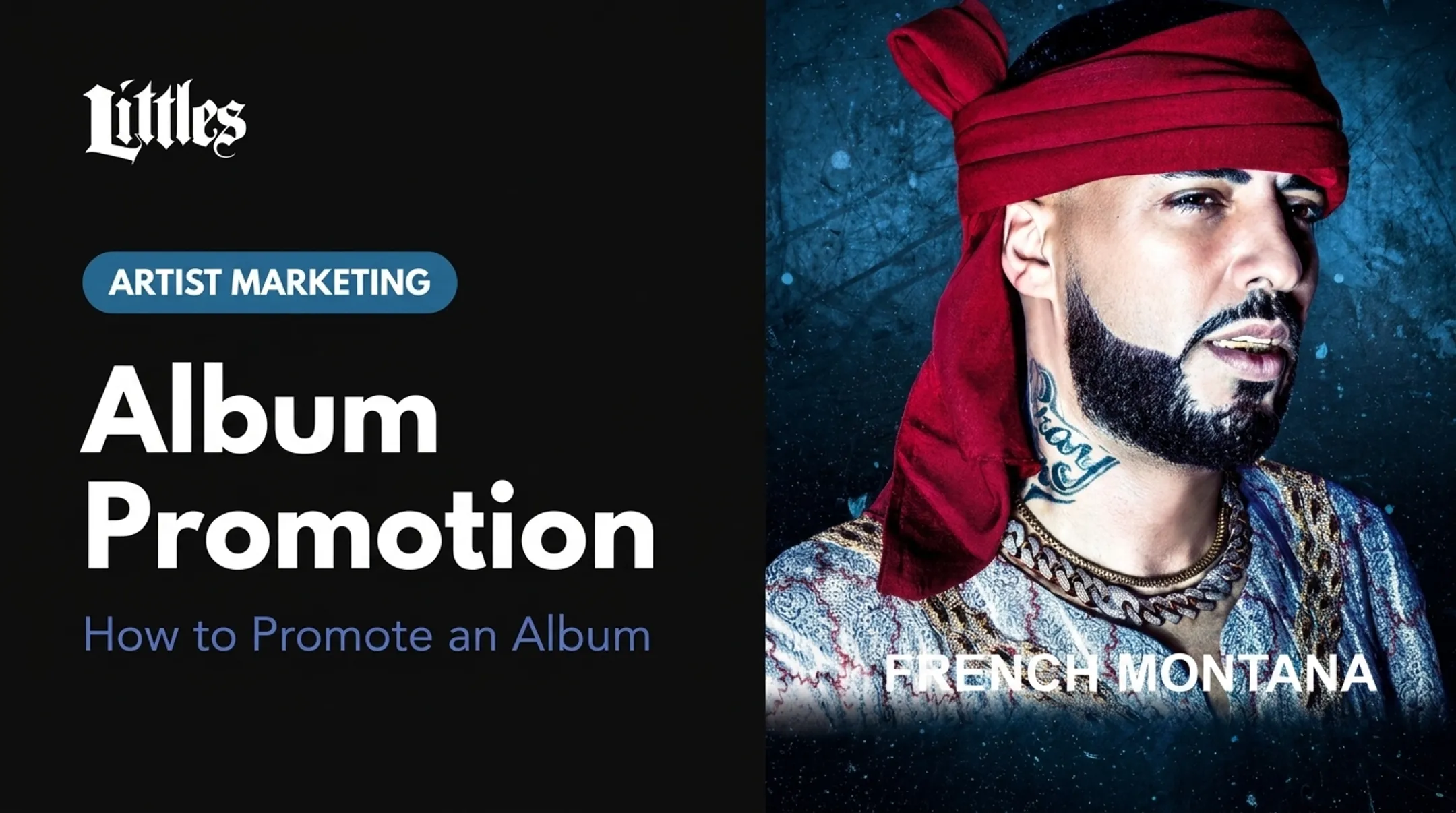
Professionally styled album artwork, posters, and logos make a release more recognizable across streaming pages, social feeds, and physical flyers. A creative partner like Best of the Block can supply those assets: the team has produced album and mixtape artwork for artists including Moneybagg Yo and French Montana.
Step 3: Build a Conversion Path
Every campaign asset should point to one place (a website, release page, or ticket link) so attention stays on a single action.
- Make the action obvious on mobile: one tap should get someone to the ticket or stream
- Use trackable links so you know which content actually drives clicks, not just likes
- Offer a real reason to join your email list, such as early ticket access or an exclusive track
If you're building that list, follow the FTC's CAN-SPAM Act guidance. Use accurate sender information, include a physical postal address, provide a clear opt-out, and honor opt-outs within 10 business days.
Step 4: Launch and Sequence the Promotion
Break the campaign into four phases: preparation, announcement, release or event, and follow-up, and assign specific content, deadlines, and an owner to each one.
Use a mix of content types: teasers, behind-the-scenes footage, live clips, rehearsal moments, fan interaction, and direct promotional posts. Timing matters here. Spotify found that Countdown Pages built at least seven days before release generated nearly twice as many pre-saves as pages created later.
Coordinate social posts, email, press outreach, and venue promotion so every channel reinforces the same message during the same window.

Step 5: Review Results and Improve the Next Campaign
Compare outcomes against your original objective, not raw vanity metrics.
- Check reach, saves, streams, signups, ticket conversions, and press mentions
- Identify which segments, formats, and posting windows performed best
- Document findings in a short campaign report and apply them to the next release
Follower growth alone is not proof of a successful campaign. Treat it as a byproduct, not a goal.
When Should You Use Different Promotion Strategies and What You Need Before Starting?
The right mix depends on your current stage, your objective, where your audience lives, and how much staff time and budget you have.
Digital Foundation
Before any campaign launches, confirm the basics are in place:
- Accurate website or landing page plus updated streaming and social profiles
- Mailing-list tool, EPK, and organized press/media files
- Trackable links, analytics access, and a live path to sell tickets or merch
Creative and Release Readiness
Lock down every detail before you spend a dollar on promotion:
- Final release dates, credits, artwork permissions, and music rights
- Confirmed show details, venue information, and ticket links
- Approved brand assets and collaborator sign-offs
With those locked, match the lever to the job and to where you are in the cycle:
- Organic social and email — everyday relationship-building and direct fan updates
- Press and collaborations — credibility spikes and reach beyond your existing audience
- Paid ads — clear conversion goals (presaves, tickets, merch) with budget to test
- Grassroots and live promo — deeper local engagement around shows and street-level awareness
Timing matters as much as the channel. Pre-release, prioritize email capture, teaser content, and targeted ads. At launch, stack press, collaborator posts, and conversion-focused spend. Between drops, lean on organic social, community plays, and live dates so you are not only visible when you have something new out.

Key Parameters That Affect Band Promotion Results
Successful promotion comes from controlling a handful of connected variables, not applying every tactic at once.
| Parameter | Why It Matters | Impact on Performance |
|---|---|---|
| Audience-message fit | Language, imagery, and calls to action should match the listener's interests and awareness stage | Matched segments convert better; one generic blast to everyone dilutes response |
| Visual consistency | Consistent artwork, photography, and typography make a band recognizable across feeds, streaming pages, and posters | A fragmented look forces fans to re-learn who you are each time; a coherent identity speeds recognition |
| Offer and CTA clarity | Listen, save, buy, join, share, contact: each asks something different | One primary CTA per asset reduces confusion and makes results easier to measure |
| Channel and content fit | Short-form video, email, press, and paid ads all serve different behaviors | Channels tied to where your fans already spend time outperform picks based on general platform hype |
| Timing and measurement | Release lead time, ticket windows, and follow-up cadence shape outcomes | Spotify's editorial pitch process requires at least seven days' notice; consistent follow-up after launch sustains momentum |
For visual consistency across artwork, photography, and typography, a branding partner such as Best of the Block can keep every asset recognizable from feed to stage.
Common Mistakes, Troubleshooting Issues, and Alternatives
Most promotion problems trace back to unclear positioning, a weak conversion path, inconsistent execution, or channels chosen without regard for audience behavior.
Common Mistakes
- Treating every platform and audience segment as equally important instead of prioritizing where fans actually spend time
- Posting only direct promotional content, with nothing entertaining or personal to keep fans engaged between releases
- Launching without finished artwork, working links, approved media, or a plan to respond to fans afterward
- Buying followers, spamming email lists, or using copyrighted material without permission
Troubleshooting Common Issues
| Issue | Likely Cause | What to Check |
|---|---|---|
| Low reach or engagement | Content mismatched to audience, visually inconsistent, or overly promotional | Audience insights, retention data, creative formats, and the clarity of your opening message |
| Strong engagement, few streams or ticket sales | Unclear CTA, weak landing page, or confusing ticket process | Landing page copy, mobile usability, trackable links, and follow-up email or retargeting |
| Inconsistent branding | No shared asset library or brand guidelines | Reusable templates, batch content production, and professional design support for major releases |
Alternatives to a Broad Digital Campaign
When budget or bandwidth is limited, grassroots tactics can outperform scattered digital spend:
- Focused email outreach and local partnerships
- Show swaps, street teams, and community events
- Targeted press outreach and college or independent radio
The trade-off: grassroots methods take more time and relationship-building, while paid ads and professional services offer speed but require budget and clear measurement.

Conclusion
Effective band marketing starts with a defined audience and a single objective, then connects strong creative assets to the right channels, a clear call to action, and consistent follow-up.
You don't need every tactic running at once. A focused campaign with recognizable visuals, honest communication, and disciplined review builds a stronger foundation than scattered promotion ever will.
Frequently Asked Questions
Who are the big 3 music distributors?
The phrase usually refers to the three major record-company groups (Universal Music Group, Sony Music Entertainment, and Warner Music Group), not a ranking of independent digital distributors. Distributors like DistroKid, TuneCore, and CD Baby operate separately from these major labels.
What is a marketing band?
"Marketing band" isn't a standard industry term. It usually means a band's marketing budget range, its marketing team, or simply "marketing a band": the process of promoting music and shows to an audience.
How much does it cost to market a band?
Costs vary widely based on creative production, advertising spend, PR, distribution, and touring needs. Start with a defined objective and a small test budget rather than expecting a universal price tag.
Which social media platform is best for promoting a band?
There's no single best platform. It depends on your audience, content style, genre, and campaign goal. Prioritize one or two channels based on current audience data rather than spreading effort everywhere equally.
How can a band promote its music without a large budget?
Lean on email, consistent organic content, collaborations, show swaps, community events, and local press. Repurposing existing live or rehearsal footage stretches limited resources further.
How do you measure whether band marketing is working?
Skip vanity metrics like raw reach and follower counts. Track qualified site visits, email signups, streams, saves, ticket purchases, and repeat engagement—these show real fan behavior, not just visibility.